The vineyards
of Finca Can Axartell
and Finca Boscana
of Finca Can Axartell
and Finca Boscana
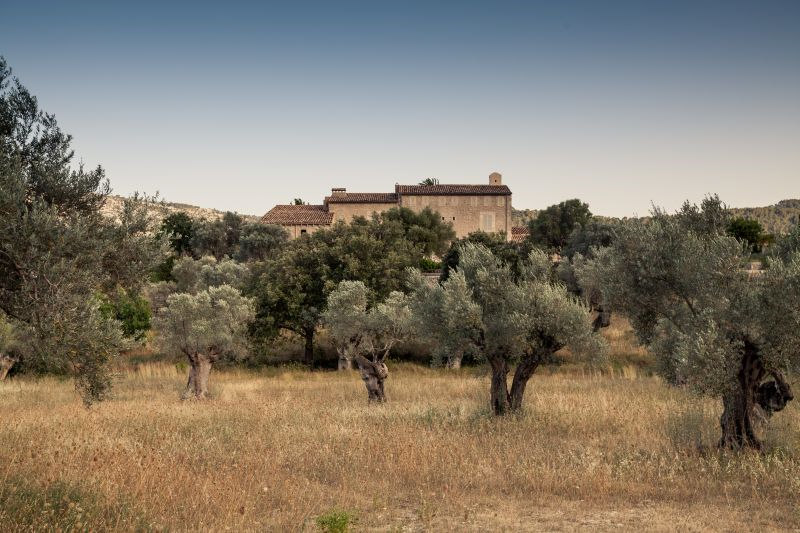
When the Finca Can Axartell was acquired in the 1990s, there were no vines on the 200 hectares. The land was used by a flock of sheep and was home to around 40 hectares of olive trees, many of which are believed to be between 500 and 1,000 years old.
Experts soon confirmed that the finca’s calcareous, calcium-rich soil and sheltered location on the edge of the Tramuntana mountains provide ideal conditions for viticulture. Cooling breezes from the Bay of Pollença, just seven kilometres away, create a distinctive climate.
Before the first vines were planted, the soil was carefully prepared and covered with herbs for two years. In the third year, the first vines were planted. Since then, all the vineyards have been farmed organically.
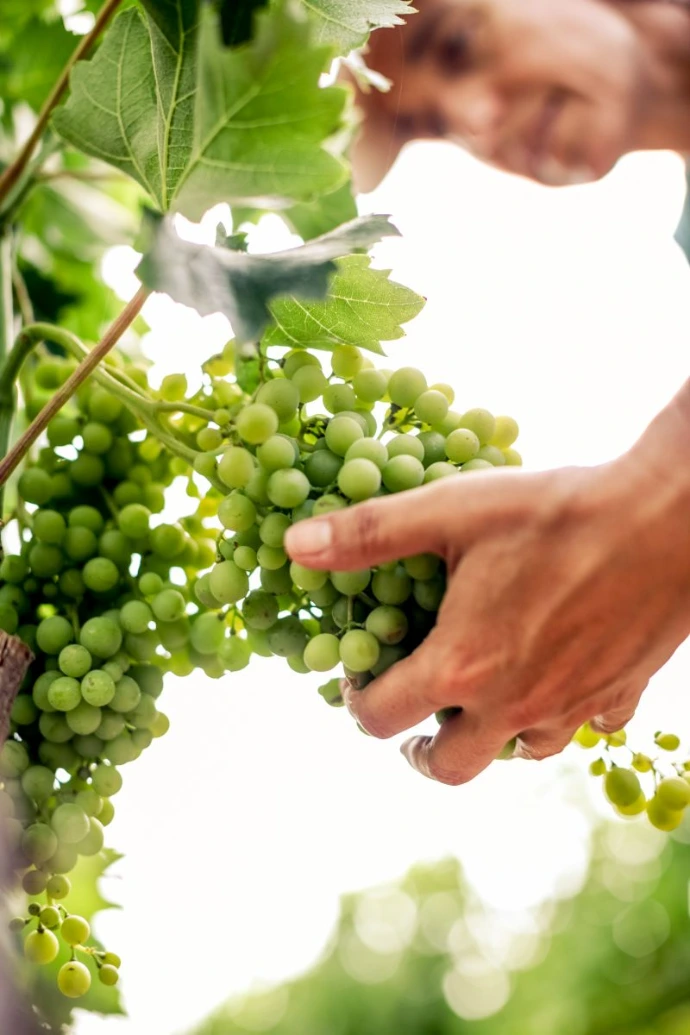
The vineyards of Finca Can Axartell
The first grape variety of the winery was Callet – an indigenous, particularly elegant variety well adapted to the climate of Mallorca. Between 2005 and 2018, 15 additional plots were added, each ranging from 1.3 to 5.5 hectares.
The calcareous soils with a calcium content of around 20% provide ideal conditions for red grape varieties. In addition to Callet, Manto Negro, Syrah, Petit Verdot, Merlot, and various Pinot varieties grow there. Among the white grapes, Prensal, Moscatel, and Malvasia de Banyalbufar can be found.
A special feature is the 1.7-hectare experimental vineyard. Rare, some endangered, Mallorcan grape varieties are researched and preserved there.
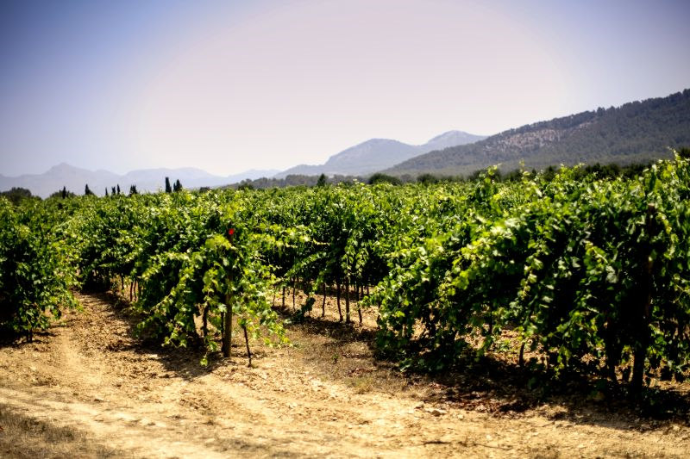
The vineyards of Finca Boscana
Finca Boscana is located about 45 kilometers southeast of Can Axartell, near Manacor and Felanitx. Its vineyards complement those of Can Axartell, as the climate and soils differ significantly. Boscana is cooler, windier, and less sheltered. The deeper soils with their higher clay content provide particularly good conditions for white grape varieties. In addition to Malvasia de Banyalbufar and Prensal, Viognier, Garnacha Blanca, and Giró Ros grow there. The cultivation is supplemented by Merlot, Giró Negre, and especially Monastrell, which is called Mourvèdre in France. Here, too, experimental vineyards with rare red and white island grape varieties are being established.